An API (Application Programming Interface) is a structured way for software systems to talk to each other. It defines how requests should be made, what data formats are accepted, and which responses are returned—so different applications can work together without friction.
Put simply, an API acts like a bridge between systems. Instead of one application needing to understand another’s internal logic, it follows a shared set of rules to exchange data or trigger actions. This allows software components to interact smoothly and reliably.
APIs come in many forms, including web APIs, library APIs, operating system APIs, and database APIs. Among these, web APIs are the most common today. They typically operate over standard web protocols such as HTTP and exchange data using formats like JSON or XML.
APIs are foundational to modern software development. They make system integration easier, allow third-party developers to extend existing platforms, and promote interoperability across applications—without exposing internal implementation details.
Stock Market — The Basics
The stock market is a marketplace where shares of publicly traded companies are bought and sold. When investors purchase a stock, they are buying partial ownership in a company and participating in its financial performance.
The stock market serves several important functions:
- Capital Formation: Companies raise funds by issuing shares to the public. This capital can be used to expand operations, invest in research and development, or reduce debt. When a company first offers shares, it does so through an Initial Public Offering (IPO) on a stock exchange.
- Investment Opportunities: Investors use the stock market to grow wealth over time. Profits can come from price appreciation—buying low and selling high—or from dividends, which are periodic profit distributions paid to shareholders.
- Liquidity: Stocks can be bought and sold quickly, making the market highly liquid. This allows investors to enter and exit positions with ease and convert holdings into cash when needed.
- Price Discovery: Stock prices are determined by supply and demand. As buyers and sellers interact, prices adjust to reflect company performance, economic conditions, news events, and investor sentiment.
Stocks are traded on organized exchanges such as the New York Stock Exchange (NYSE), London Stock Exchange (LSE), and Tokyo Stock Exchange (TSE). In addition to traditional exchanges, many trades now occur on fully electronic platforms.
It’s important to recognize that stock market investing involves risk. Prices can fluctuate significantly, and returns are never guaranteed. Successful investors typically rely on research, risk management, and clear financial goals—often with guidance from financial professionals.
Why Do We Need Stock Market APIs?
Stock market APIs make it possible to access market data and functionality programmatically. They are essential tools for developers, traders, analysts, and financial platforms. Here’s why they matter:
- Real-Time Market Data: APIs provide live or near-real-time access to stock prices, volume, indices, and company fundamentals. This is critical for making timely trading and investment decisions.
- Historical Data & Analysis: With API access to historical prices and financial metrics, users can analyze trends, run backtests, build statistical models, and evaluate long-term market behavior.
- Trading Bots & Portfolio Tools: APIs power automated trading systems, portfolio trackers, and alert engines. These tools can monitor positions, execute trades based on predefined rules, and notify users of market movements.
- Financial Applications: Stock market APIs are the backbone of financial apps such as stock screeners, market dashboards, research tools, robo-advisors, and investment trackers. They enable personalized insights and data-driven features.
- System Integration: APIs allow market data to flow seamlessly into websites, mobile apps, dashboards, and internal systems—enhancing functionality without manual data handling.
- Enterprise & Infrastructure Use: Financial institutions rely on APIs to connect trading systems, exchanges, and data providers. This enables automation, scalability, and efficient data processing across large infrastructures.
Stock market APIs unlock programmatic access to financial data, enabling innovation across trading, research, and investment platforms. By standardizing how market data is accessed and consumed, APIs democratize financial information and empower individuals and businesses to participate more effectively in global markets.
The Core Focus — Top Stock Market APIs for Global Markets
Stock market APIs differ in meaningful ways, and understanding these differences is key to choosing the right solution. Below are the primary factors that distinguish one stock market API from another and determine how well it fits a specific use case.
- Market Data Coverage: Not all APIs offer the same scope of information. Some provide a broad dataset that includes real-time quotes, historical prices, company fundamentals, market indices, and financial news. Others are more specialized, focusing on a limited subset such as price quotes or balance sheets. The depth and range of data available should align closely with your application’s requirements.
- Speed & Real-Time Access: For trading platforms and live dashboards, data latency matters. Certain APIs deliver real-time or near-instant updates as market conditions change, while others offer delayed data feeds. Depending on whether accuracy or immediacy is more important, different update speeds may be acceptable.
- Historical Market Data: Historical data is essential for backtesting strategies, analyzing trends, and performing quantitative research. APIs vary in how far back their data goes and in what resolution it’s offered—ranging from tick-level or minute-level data to daily or aggregated intervals.
- Supported Data Formats: Stock market APIs can return data in multiple formats such as JSON, XML, or CSV. The chosen format affects how easily data can be parsed, stored, and integrated into existing systems. Developer-friendly APIs typically favor clean, structured formats that work well across platforms.
- Authentication & Access Management: Most APIs use authentication mechanisms to secure access and manage usage. Some provide limited public access, while others require API keys or tokens. Subscription tiers often determine request limits, data availability, and access to premium features.
- Documentation & Developer Support: Clear documentation is critical for rapid integration. High-quality APIs provide detailed endpoint references, parameter explanations, and real-world examples. Additional developer resources—such as SDKs, forums, or direct support—can significantly reduce development time and friction.
- Rate Limits & Usage Rules: To maintain stability and fair use, APIs enforce rate limits that cap how many requests can be made within a given time window. These limits often vary by pricing plan. Understanding usage policies upfront helps prevent service interruptions and ensures your application can scale reliably.
Each of these factors plays a role in determining the best stock market API for a given project. By evaluating data coverage, performance, historical depth, ease of integration, and usage constraints, developers can select an API that aligns with both technical needs and business goals.
1. Mboum API
API Pricing
- The Mboum API offers flexible pricing designed to scale with your needs.
- A free tier is available for developers who want to explore the platform or power lightweight applications, with a monthly request limit included.
- Paid plans unlock higher request quotas, expanded endpoint access, and enhanced performance—making them suitable for production systems, trading tools, and data-driven platforms.
Key Features
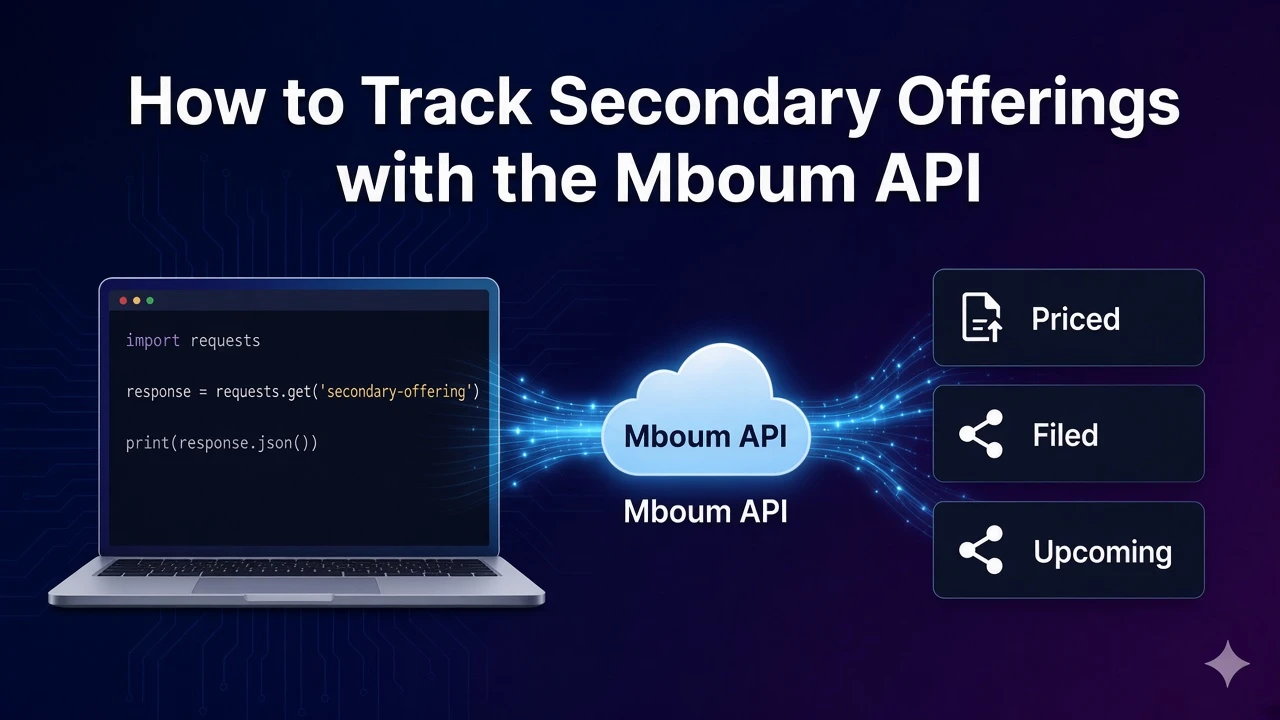
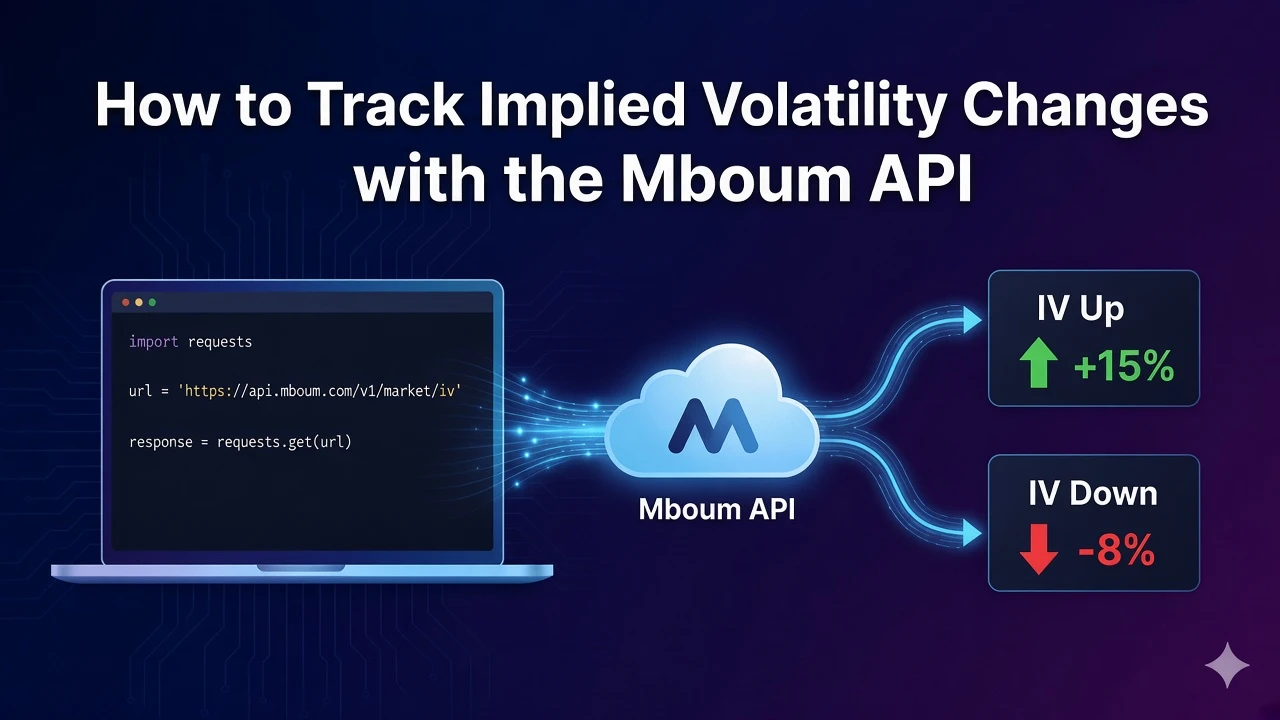
- Real-Time & Historical Market Data: Mboum API provides access to both live and historical market data, including stock prices, intraday candles, company fundamentals, market indicators, and options data—ideal for analysis, backtesting, and real-time applications.
- Worldwide Market Coverage: The API supports data from major global exchanges, enabling international market analysis and cross-market comparisons without relying on multiple data providers.
- Fast & Simple Integration: Designed with developers in mind, Mboum API integrates easily into web apps, trading systems, dashboards, and backend services. It works seamlessly across popular programming languages and frameworks.
- Flexible Data Queries: Developers can tailor API requests to retrieve only the data they need—such as specific time ranges, indicators, symbols, or market segments—helping optimize performance and reduce unnecessary usage.
- Enhanced Market Metrics: In addition to raw pricing data, Mboum API includes enriched data points such as market capitalization, volume metrics, technical indicators, and other analytical inputs to support deeper financial insights.
- Clear, Developer-Focused Documentation: Comprehensive documentation with clear endpoint descriptions, request parameters, and real-world examples makes onboarding fast and painless—even for first-time users.
- Reliable Developer Support: Mboum provides structured documentation, FAQs, and responsive support channels to help developers troubleshoot issues and maximize API usage.
- High Data Reliability: The API is built to deliver consistent and dependable data. While market feeds may occasionally reflect upstream delays, Mboum prioritizes accuracy and stability across all supported endpoints.
- Security & Access Control: Mboum API uses secure authentication methods and industry-standard encryption to protect API access, usage data, and user credentials—ensuring a safe and reliable integration environment.
2. Alpha Vantage
Alpha Vantage is a financial data provider that offers a range of financial market data and analytics. Let’s explore its features, pros and cons based on different aspects:
Alpha Vantage Finance API Pricing
- Free: 500 requests per day
- Basic: $19/month
- Standard: $49/month
- Premium: $99/month
Pros of Alpha Vantage
- Wide coverage of financial instruments and data points.
- Real-time data updates for many financial instruments.
- Availability of historical data for analysis and backtesting.
- Data formats suitable for easy integration into applications.
- Comprehensive documentation and community support.
- Offers a free-tier plan with access to basic data.
Cons of Alpha Vantage
- Higher-tier plans may be required for access to premium features and increased rate limits.
- Not possible to execute trades — users would need a dedicated brokerage API for that.
3. Quandl
Quandl is a financial data platform that provides access to a wide range of financial and alternative data. Here’s an overview of the key aspects of Quandl, including its features, pros and cons:
Quandl Finance API Pricing
- Free: 500 requests per day
- Bronze: $10/month
- Silver: $25/month
- Gold: $50/month
- Platinum: Custom pricing
Pros of Quandl
- Wide coverage of financial and alternative data sets.
- Availability of real-time updates for certain instruments.
- Extensive historical data for in-depth analysis and research.
- Provides data in multiple formats for easy integration.
- Comprehensive documentation and customer support.
Cons of Quandl
- Some advanced features or specific data sources may require higher-tier subscription plans.
- Pricing can vary based on the level of data access and support required.
- Users with very specific or niche data requirements may need to explore additional data providers.
4. SteadyAPI Finance
Here is a summary of the data coverage, real-time updates, historical data availability, data formats, authentication and access control, documentation and support, rate limits and usage policies, price, reviews, pros and cons of SteadyAPI:
SteadyAPI Finance API Pricing
- Free: Limited daily requests
- Starter: $14.99/month
- Developer: $39.99/month
- Business: $89.99/month
- Enterprise: $299.99/month
Pros of SteadyAPI Finance
- Broad stock and options data coverage
- Real-time and near real-time market updates
- Historical stock and options data availability
- JSON and CSV data formats
- Simple and easy-to-use API
- Clear documentation and onboarding guides
- Flexible pricing tiers for developers and businesses
Cons of SteadyAPI Finance
- Some market data may be delayed depending on plan
- Rate limits apply for higher-volume usage
5. Tiingo
Tiingo is a financial data platform that offers a range of data services for investors, developers, and researchers. Let’s explore its features, pros and cons based on different aspects:
Tiingo Finance API Pricing
- Starter: $0/month
- Power: $30/month
Pros of Tiingo
- Comprehensive coverage of financial instruments and data points.
- Real-time data updates for timely decision-making.
- Extensive historical data for analysis and research.
- Data delivered in a well-supported JSON format.
- Comprehensive documentation and developer support.
- Offers a free-tier plan with basic data access.
Cons of Tiingo
- Advanced features and additional data coverage may require higher-tier subscription plans.
- Real-time data availability may be limited for certain instruments.
- Rate limits and usage policies may impact high-frequency or large-scale data consumption.
- Some users may require more specialized or niche data sets that may not be available.
6. Xignite
Xignite is a financial data provider that offers a wide range of market data and financial information. Let’s explore its features, pros and cons based on different aspects:
Xignite Finance API Pricing
- Basic: $299/month
- Standard: $499/month
- Premium: $999/month
Pros of Xignite
- Comprehensive coverage of various asset classes and data points.
- Real-time data updates for timely decision-making.
- Extensive historical data availability for analysis and research.
- Supports multiple data formats for easy integration.
- Comprehensive documentation and developer support.
- Offers enterprise solutions and customized packages.
Cons of Xignite
- Pricing details may not be readily available and can vary depending on the specific requirements.
- Some advanced features or specific data sets may require higher-tier subscription plans.
- Rate limits and usage policies may impact high-frequency or large-scale data consumption.
7. Yahoo Finance API
Yahoo Finance API is a widely used financial data API that provides access to a range of market data and financial information. Let’s explore its features, pros and cons based on different aspects:
Yahoo Finance API Pricing
- Custom Pricing
Pros of Yahoo Finance API
- Comprehensive coverage of various financial instruments and data points.
- Availability of real-time and historical data for analysis and research.
- Free to use without any subscription or payment requirements.
- JSON format for easy integration into applications.
- Popular and widely used by the developer community.
Cons of Yahoo Finance API
- Limited official documentation and support.
- Reliability and data consistency issues reported by some users.
- Lack of rate limits or usage policies, potentially impacting service stability.
- Real-time data availability may not be consistent or timely for all instruments.
8. IEX Cloud
Here is a summary of the data coverage, real-time updates, historical data availability, data formats, authentication and access control, documentation and support, rate limits and usage policies, price, reviews, pros and cons of IEX Cloud:
IEX Cloud Finance API Pricing
- Free: 100 requests per day
- Pay are you go: Contact Website
- Grow: $100/month
- Enterprise: Custom pricing
Pros of IEX Cloud
- Wide range of data coverage
- Real-time updates for some data types
- Historical data availability for most data types
- JSON and CSV data formats
- Easy to use API
- Comprehensive documentation and support
- Generous free tier
Cons of IEX Cloud
- Some data is delayed
- Rate limits can be restrictive for high-volume users
9. EOD Historical Data API
Here is a summary of the data coverage, real-time updates, historical data availability, data formats, authentication and access control, documentation and support, rate limits and usage policies, price, reviews, pros and cons of EOD Historical Data API:
EOD Historical Data API Pricing
- Free plan: 20 API Calls per day
- All in one — Package: $79.99/month
- All world — Package: $19.99/month
- All world Extended — Package: $29.99/month
- Fundamentals Data — Package: $49.99/month
Pros of EOD
- Wide range of data coverage
- Historical data availability for most data types
- CSV data format
- Easy to use API
- Comprehensive documentation and support
- No rate limits or usage policies
Cons of EOD
- No real-time updates
- Can be expensive for high-volume users
10. OpenFin API
Here is a summary of the data coverage, real-time updates, historical data availability, data formats, authentication and access control, documentation and support, rate limits and usage policies, price, reviews, pros and cons of OpenFin API:
OpenFin API Pricing
- Free: 100 requests per day
- Starter: $7/month
- Pro: $29/month
- Enterprise: Custom pricing
Pros of OpenFin
- Wide range of data coverage
- Real-time updates for some data types
- Historical data availability for most data types
- JSON, CSV, and XML data formats
- Easy to use API
- Comprehensive documentation and support
- Generous free tier
Cons of OpenFin
- Some data is delayed
- Rate limits can be restrictive for high-volume users
After reviewing a wide range of stock market data APIs, it’s clear that each provider serves a different type of developer or use case. However, a few platforms stand out for their balance of data coverage, usability, and pricing.
Mboum API is a strong all-around solution for developers, traders, and SaaS platforms looking for a modern and scalable market data API. It offers a broad set of real-time and historical stock and options data, global market coverage, flexible querying, and clear developer-focused documentation. With a generous free tier and paid plans that scale smoothly into production use, Mboum API is well suited for both early-stage projects and high-traffic financial applications.
SteadyAPI is another solid option, particularly for developers focused on stock and options data with straightforward integration needs. It provides real-time and historical market data, clean JSON and CSV responses, and flexible pricing tiers that work well for individual developers and small to mid-sized businesses. SteadyAPI’s simplicity and clarity make it an attractive choice for building trading tools, analytics dashboards, and financial SaaS products.
Alpha Vantage remains a popular choice for developers who want broad market coverage and extensive documentation, especially for quantitative analysis and educational projects.
Quandl excels in historical and alternative data, making it useful for long-term research and academic analysis.
Tiingo is a reliable option for historical market data at an affordable price point.
Xignite is best suited for enterprise-level users who need premium real-time data across multiple asset classes.
Yahoo Finance API can be useful for free access and experimentation but may lack consistency and official support.
IEX Cloud, EOD Historical Data, and OpenFin API each offer solid capabilities depending on pricing tolerance, data freshness, and flexibility requirements.
Overall, the best stock market API depends on your specific goals, budget, and technical needs. For developers seeking a modern, scalable, and developer-friendly solution, Mboum API and SteadyAPI stand out as two of the most practical and accessible options available today.